and on and on and on and on and on and so on
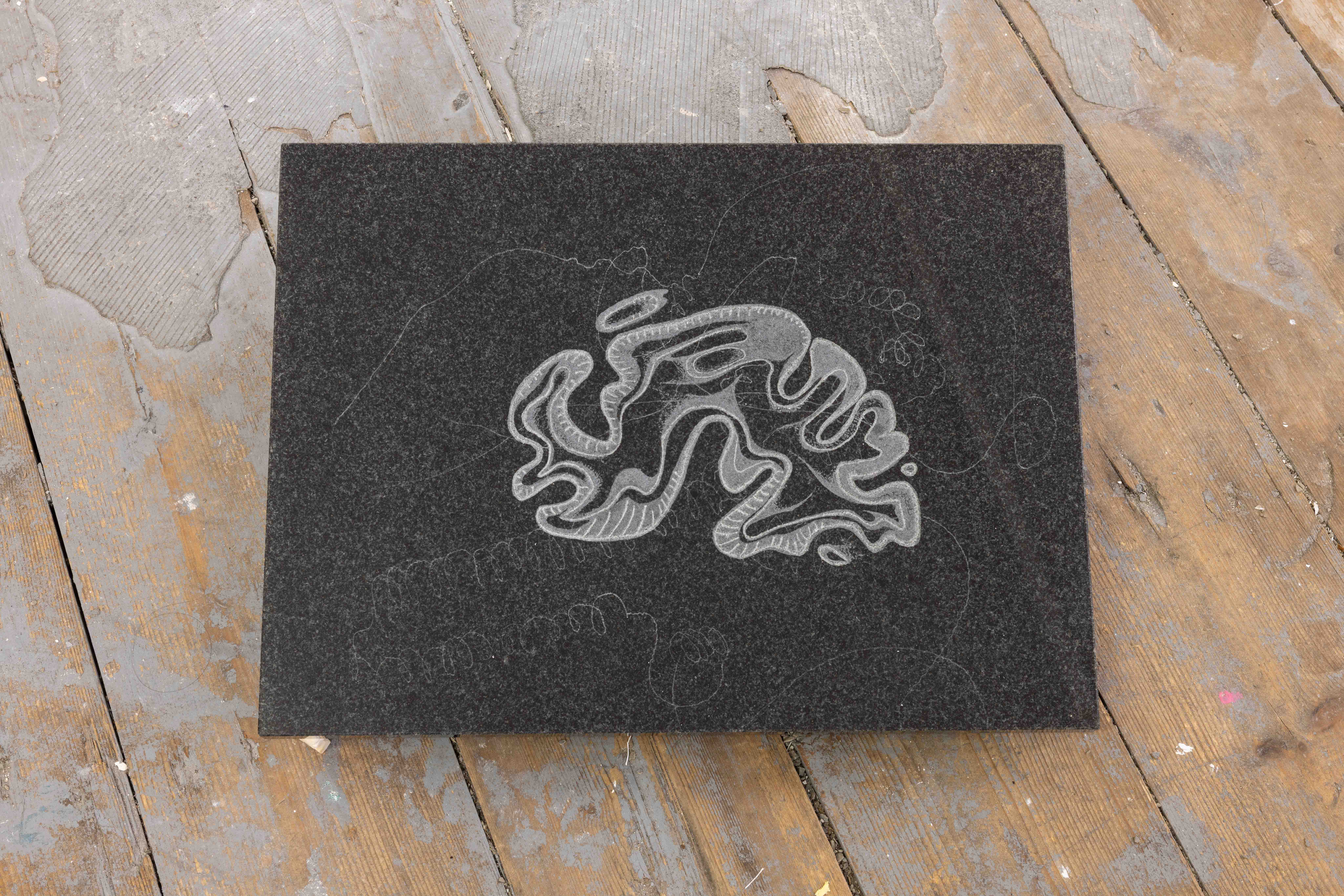
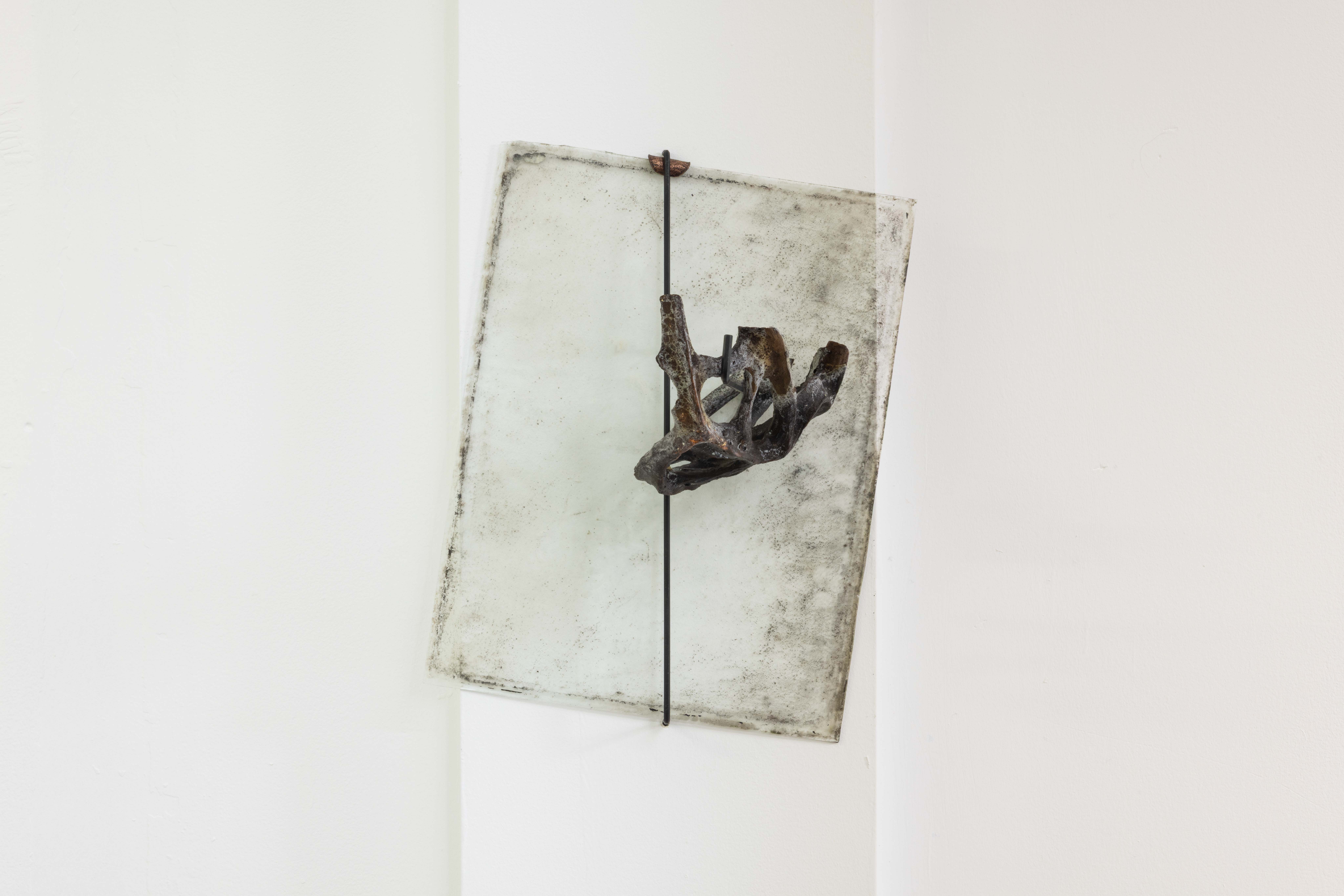
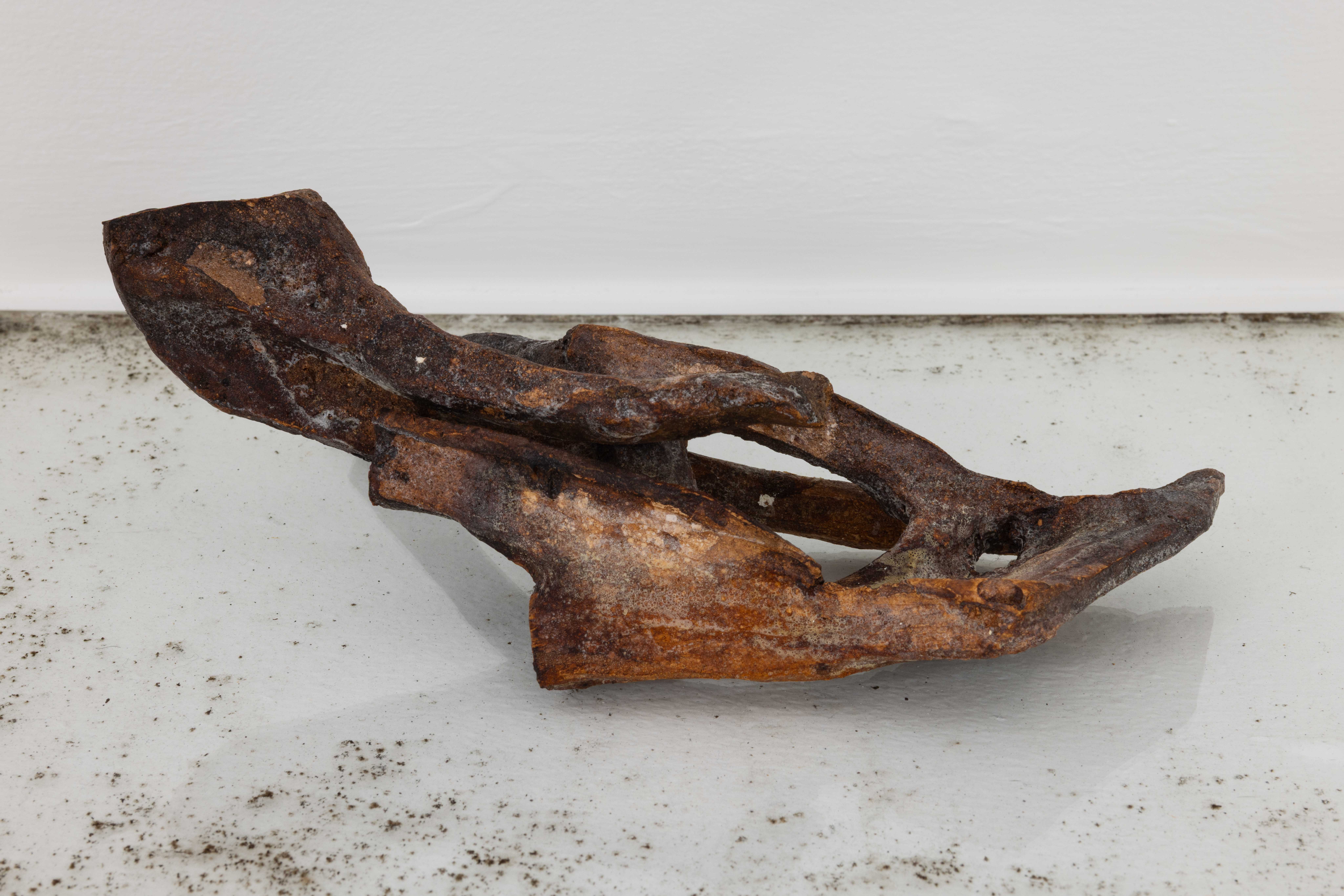
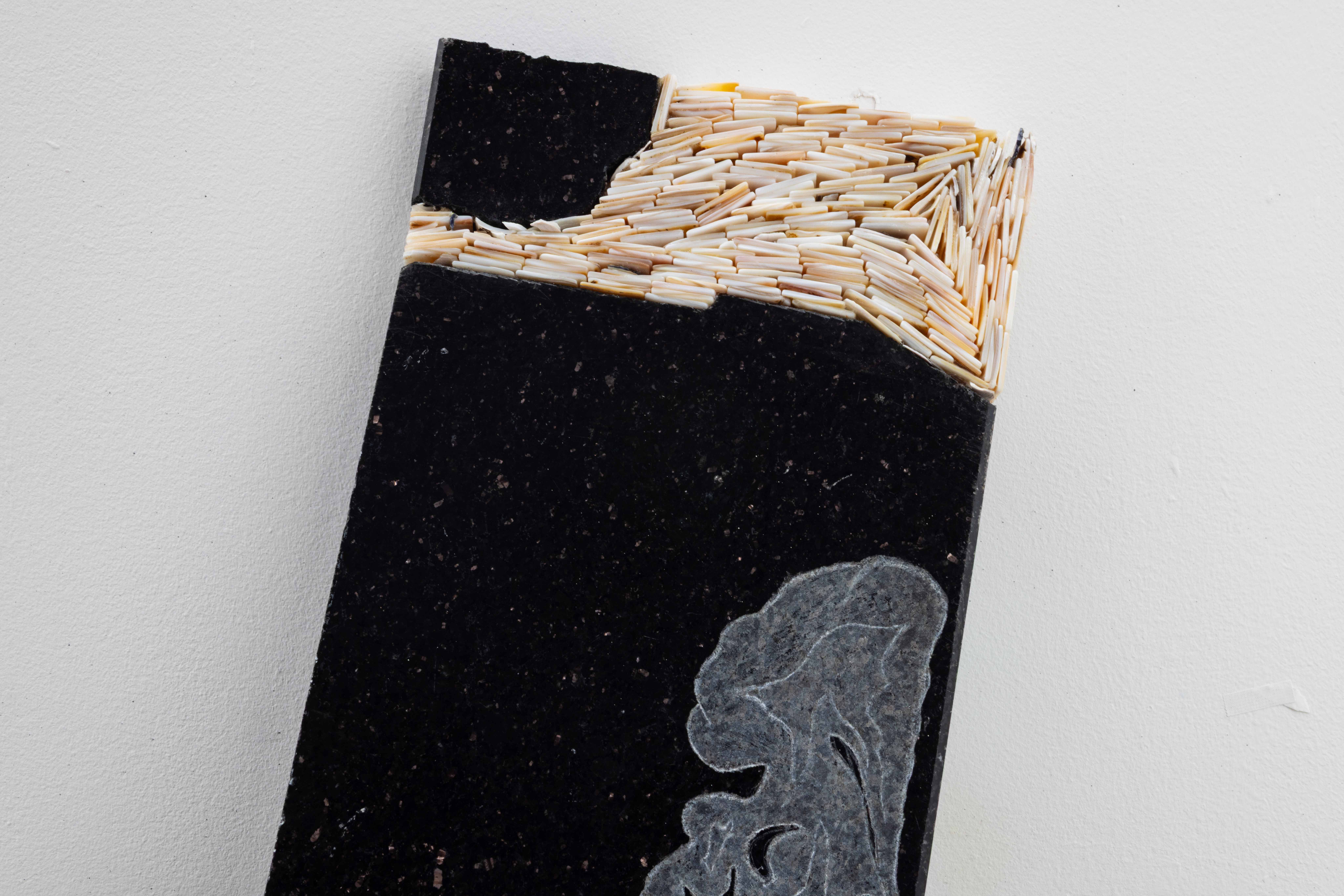
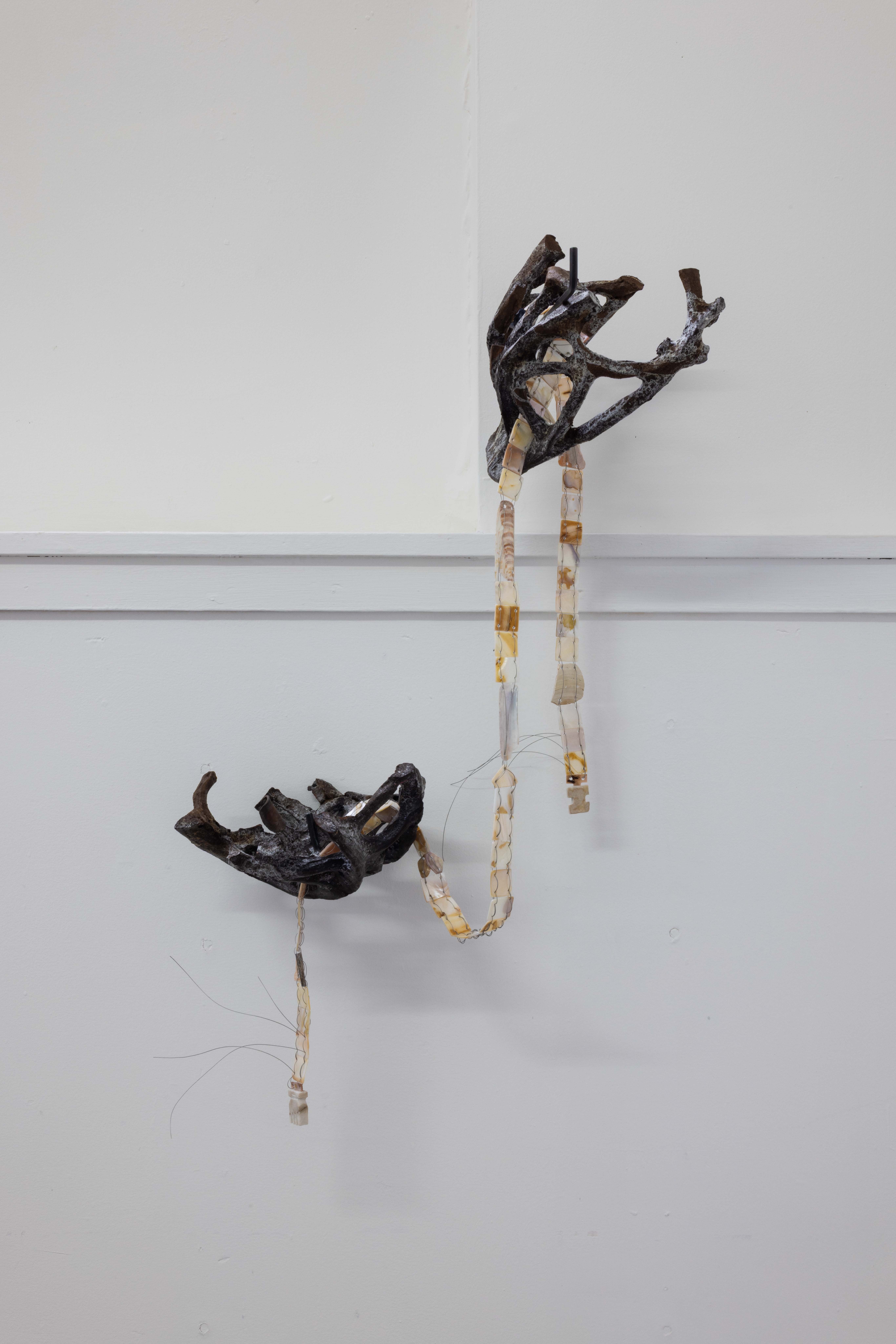
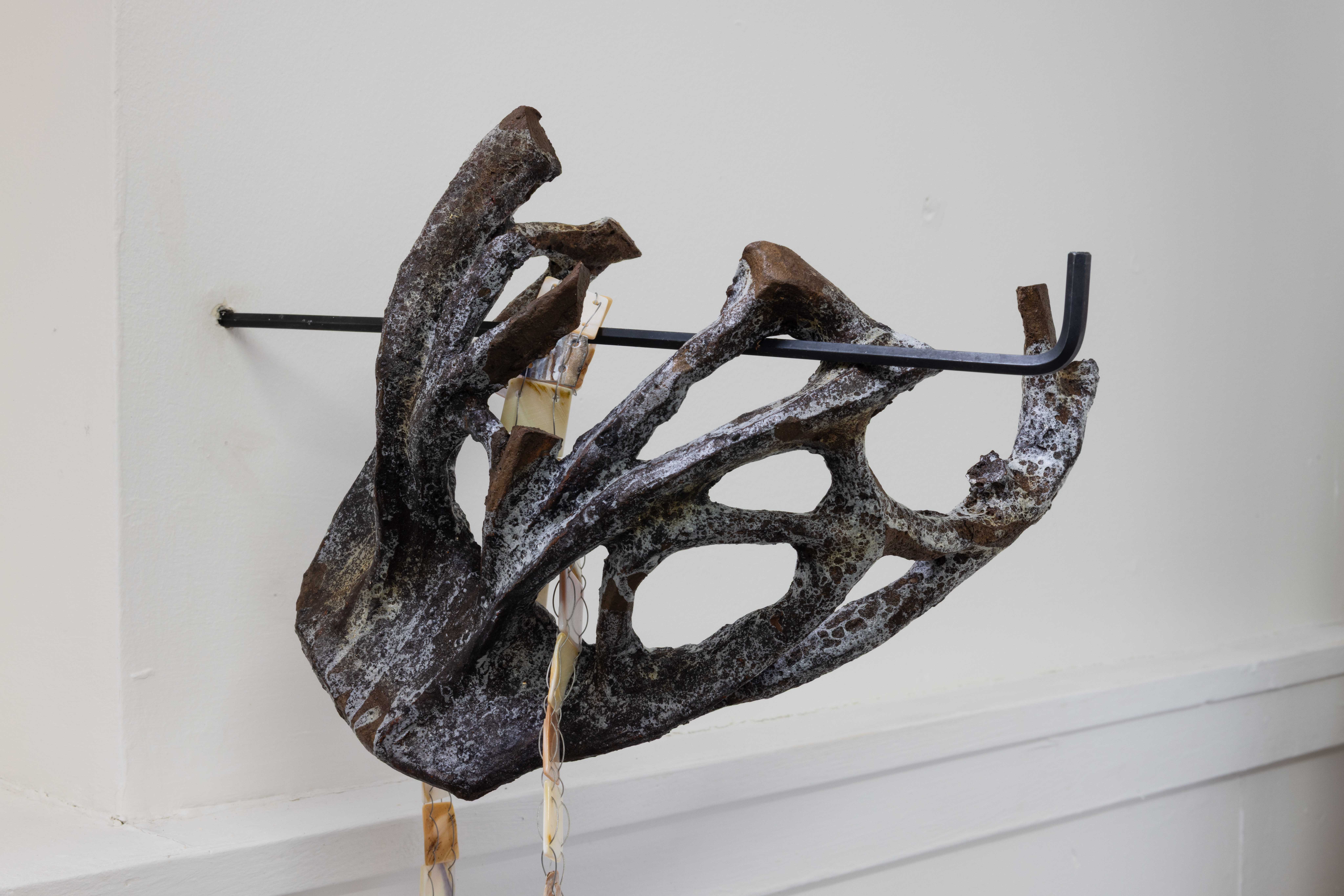
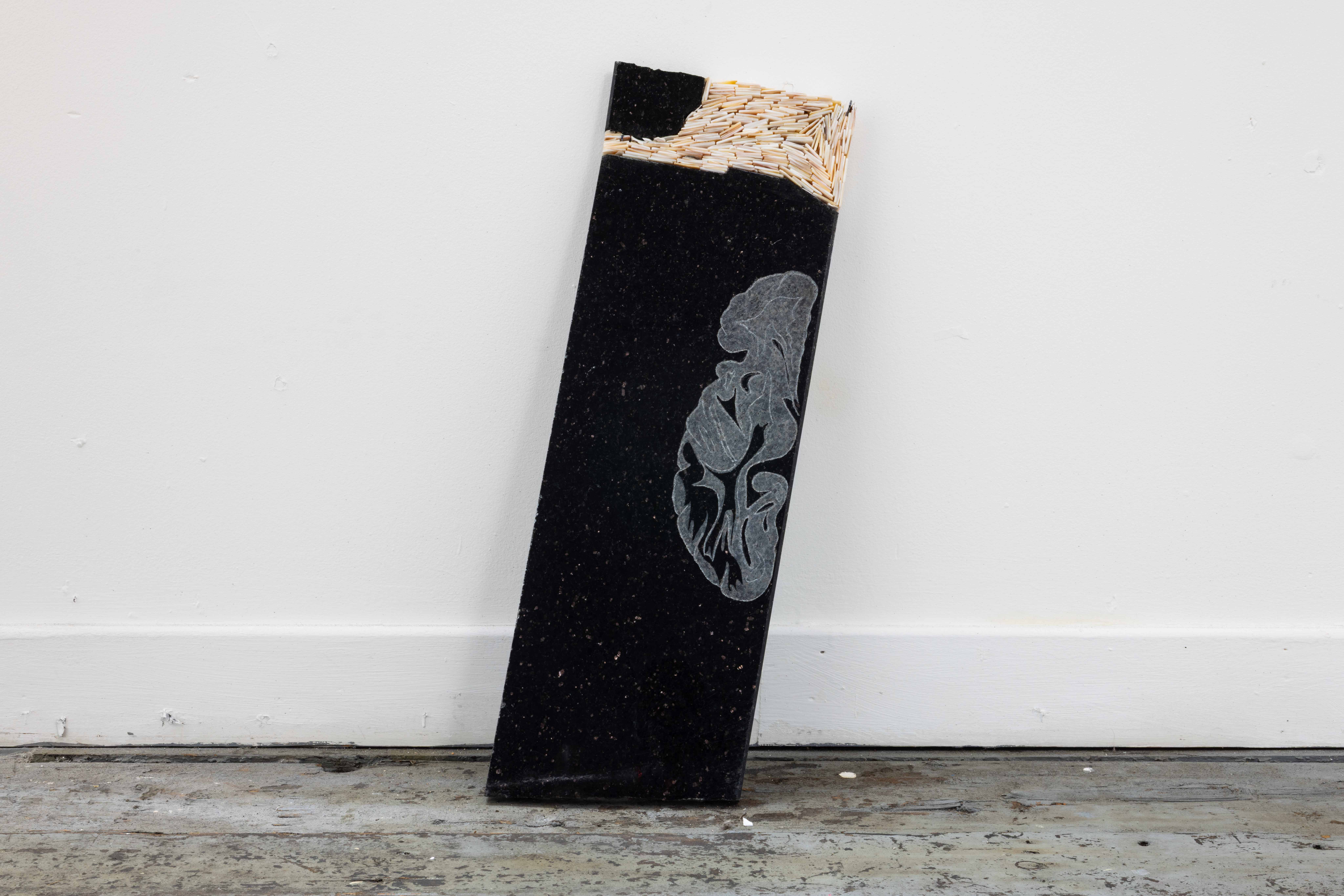
glass, smog, silica, allen keys, pennies, granite, shell, wire, reclaimed clay, waste paper, marble, coffee
Lithic Fantasy, 40 Fox Street, Glasgow, 2026
Lithic Fantasy, 40 Fox Street, Glasgow, 2026
Presented at Lithic Fantasy, an exhibition with Erika Silverman, and Paige Silverman, presenting a series of sculptures which consider the human body at the moment of temporal distortion. The exhibition uses discarded and overlooked materials to pull apart moments where the individual and the collective, surface and interior, collapse into one another.
We use the word ‘body’ for things of reliable mass. A body of water, for example. A social body and the body – our own animalistic bulk. It is a word to describe an organised thing with a complex set of functions working together as a whole. There are, however, few words in the English language that accurately describe how these forms come apart, only to form something entirely new. Disintegration, decomposition, dismembering, dissolution. Each requires a dis, a prefix that indicates an opposite action, relying on the verb or adjective attached to glean any meaning from the word. Thus the coming apart of a body is only ever rendered an oppositional force, a description of atoms being ripped apart, an echo of the thing-before-the-thing.
The removal of form from a body is indeed an act of destruction (another dis-word, disaster is usually what we would use to describe it) but what I am looking for, now, is not necessarily a way to understand the end of something through its degradation, but what emerges in its place as a beginning once this original body has ceased to exist as one distinct form. In essence, what remains or what is catalysed by such a force, a thing that moves in its shadows and forms around it, with it, through its very dissolution.
The works in this lithic fantasy pick at the skin of this atmospheric mass: accumulations of protein (milk, shell) and mineral (graphite, ceramic) collaborate with the detritus, mental and physical, of the cityscape. Georg Simmel found in the stuff of the city – its structure of social life and its stimulating atmosphere – the alienation of the individual from what is produced and consumed, leading to a coldness and a hardness that benefitted economy, industry, and capital above all. Yet it is in the city, in spaces such as these, that urban life cracks and folds, in what Stefano Harney and Fred Moten have identified as the ‘undercommons’. A space “beyond the beyond”, where the debris of extraction, consumption and loss accumulates into new, undulating forms.
-- text by Eilidh Nuala Duffy
.jpg)
photography by Matthew Barnes